hi.
I teach my 470,000 TikTok followers and 190,000 Instagram followers how to invest and trade stocks. Wanna learn more? Check the links below:
I teach my 470,000 TikTok followers and 190,000 Instagram followers how to invest and trade stocks. Wanna learn more? Check the links below:

Why identical funds have different prices, and how to actually build your portfolio.
If SPY, VOO, and SPYM all track the S&P 500, why is the pricing so different? The Misconception: "If it’s cheaper, it must not be very good." The Reality: It’s just about how the fund was "cut." If you have a $1,000 cake, you can cut it into 10 slices ($100 each) or 100 slices ($10 each). The cake is the same.
Imagine a fund owns $385,000 worth of stock (AUM: Assets Under Management). • Fund A: Issues 1,000 shares. Price = $385.00 • Fund B: Issues 2,000 shares. Price = $192.50 • Fund C: Issues 10,000 shares. Price = $38.50 Even though the holdings are identical, Fund C is more attainable for retail investors because it has more shares in circulation.
Inexperienced investors often think they are "diversifying" by buying SPY, VOO, and SPYM. They think they'll see which one "wins." The reality is they are identical. You are just making your taxes more complicated.
Chart 1: SPYM (The "Cheap" Slice)
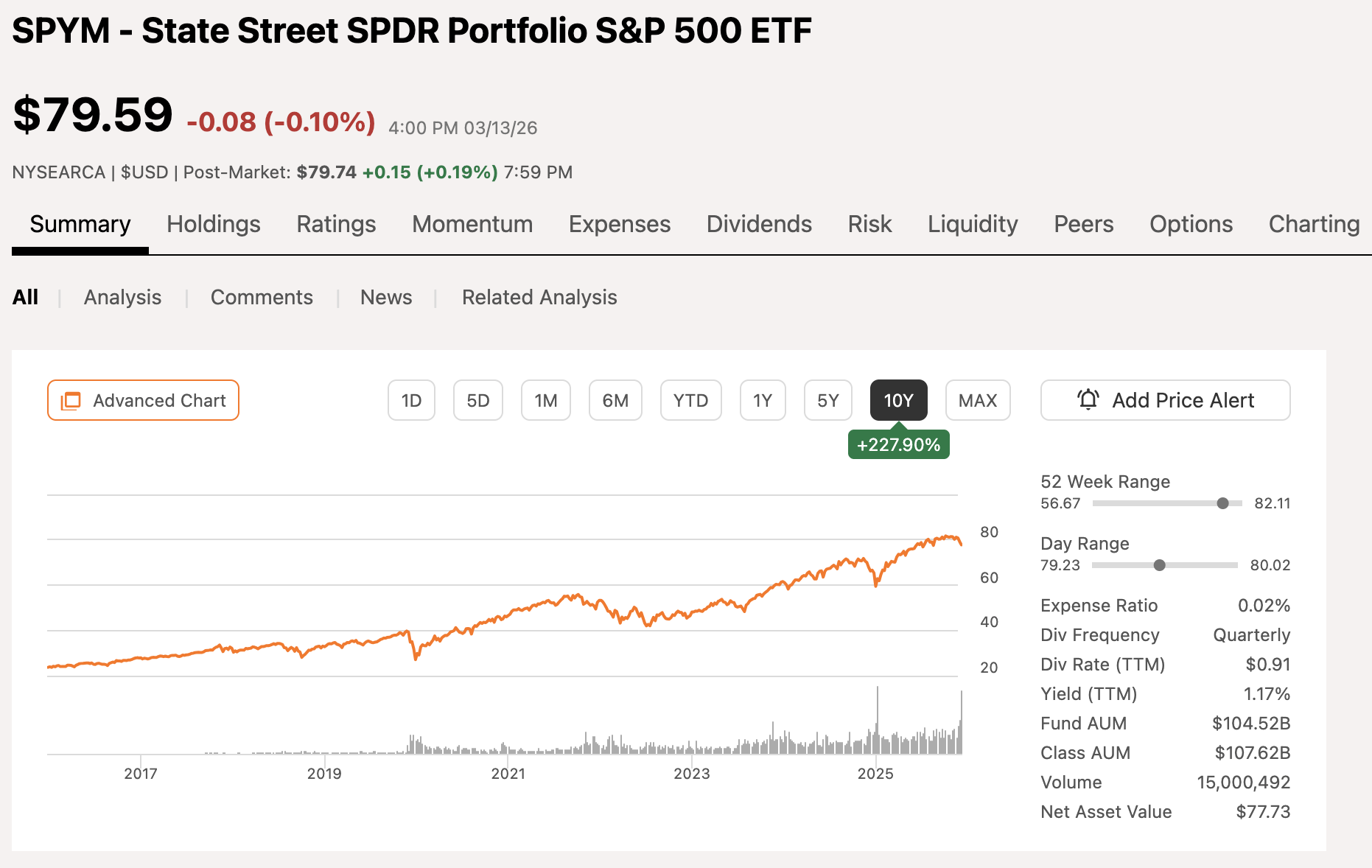
Chart 2: SPY (The "Expensive" Slice)
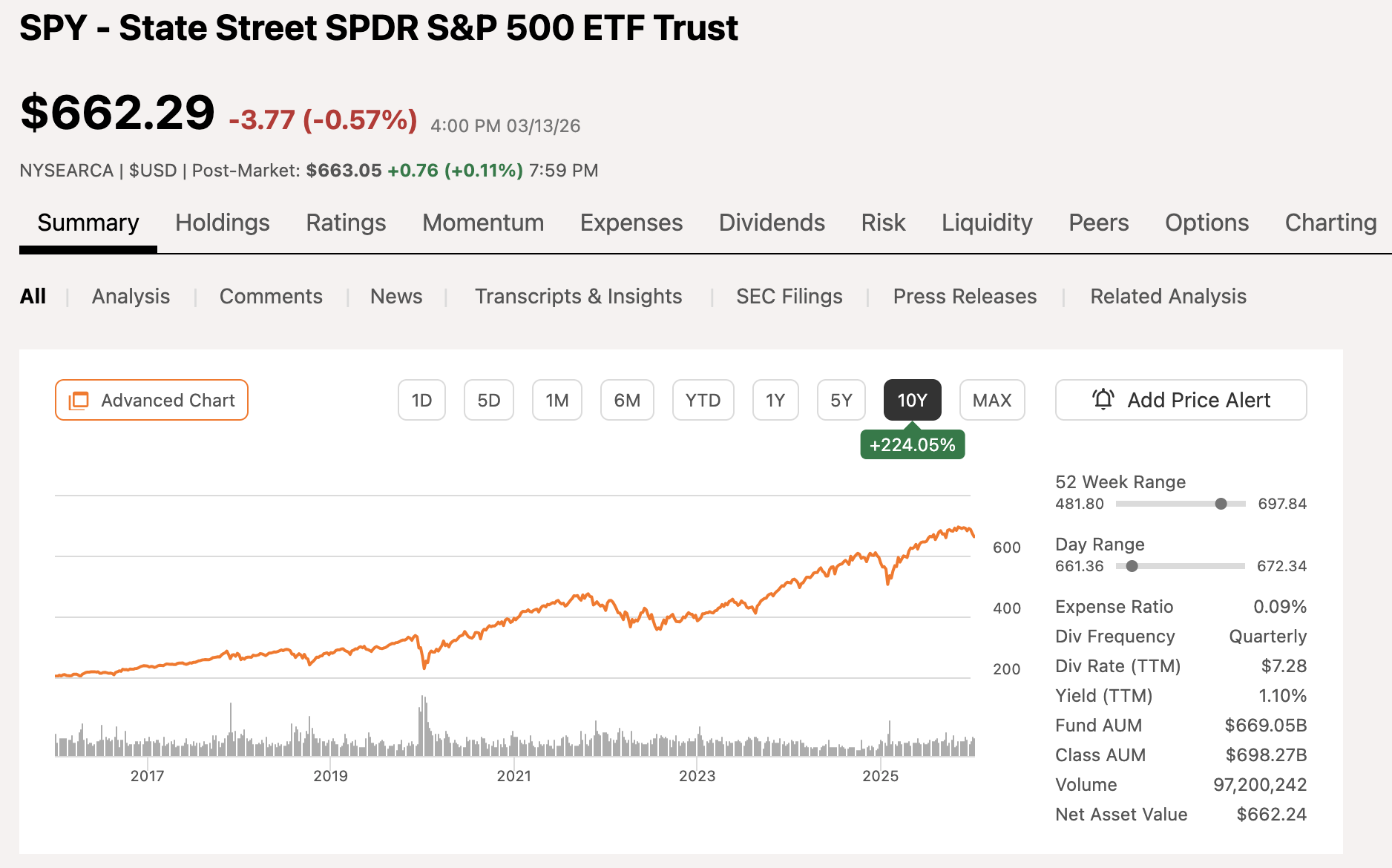
Chart 3: VOO (The Vanguard Slice)
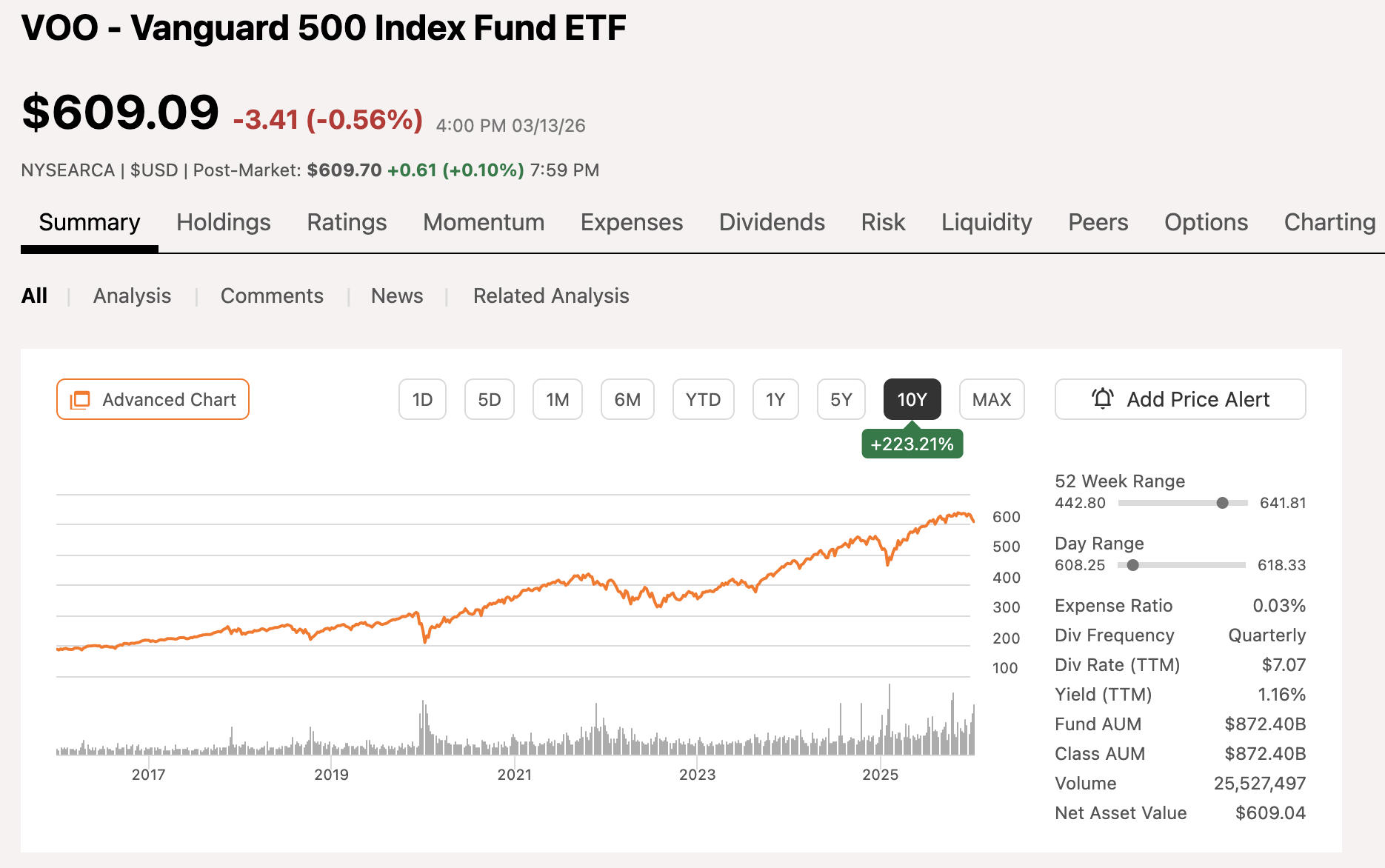
Notice the pattern? The charts are identical. The only thing that changes is the price per share and the name on the building.
You don't get billed for these; they are taken out of the fund's performance. When comparing the "Big Three" S&P 500 funds, the cheapest share price (SPYM) actually has the lowest fee:
| ETF Ticker | Exp. Ratio | Cost per $10k/yr |
|---|---|---|
| SPY | 0.09% | $9.00 |
| VOO | 0.03% | $3.00 |
| SPYM | 0.02% | $2.00 |
Is the expensive fund better for dividends? Let's look at investing $45,100 across all three:
If you're new and on a limited budget, your focus should be building the foundation BEFORE you work on the attic. Worry about individual stocks LATER. First, focus on your core ETF portfolio.
• If you want ONE ETF: Consider a broad S&P 500 fund.
• If you want a 2-fund approach: Consider a Technology fund in your Roth IRA as your ONLY investment (to avoid taxes on the biggest gains possible) and a Dividend fund in your individual account.
• If you want a 3-fund approach: Add an S&P 500 fund to your individual account. If you're worried about overlap between Tech and S&P 500, consider an International ETF instead.
Instead of owning SPY, VOO, and SPYM (redundant), diversify your sectors. Here is how to allocate based on your goals:
| Age | Tech (Growth) | S&P 500 (Core) | Dividend (Income) |
|---|---|---|---|
| 20-40 | 50% | 30% | 20% |
| 40-50 | 30% | 50% | 20% |
| 50-60 | 30% | 30% | 40% |
If you invest $5,000/year: • $2,500 Tech | $1,500 S&P 500 | $1,000 Dividend If you invest $10,000/year: • $5,000 Tech | $3,000 S&P 500 | $2,000 Dividend
Tax Tip: Consider putting your 100% Tech funds in a Roth IRA to protect those massive gains from taxes. S&P 500 and Dividend funds are great for your Individual Brokerage.
Check for overlap and compare expense ratios before you buy.
Compare Your ETFs Side-by-Side