HOW TO INVEST DURING EARNINGS SEASON
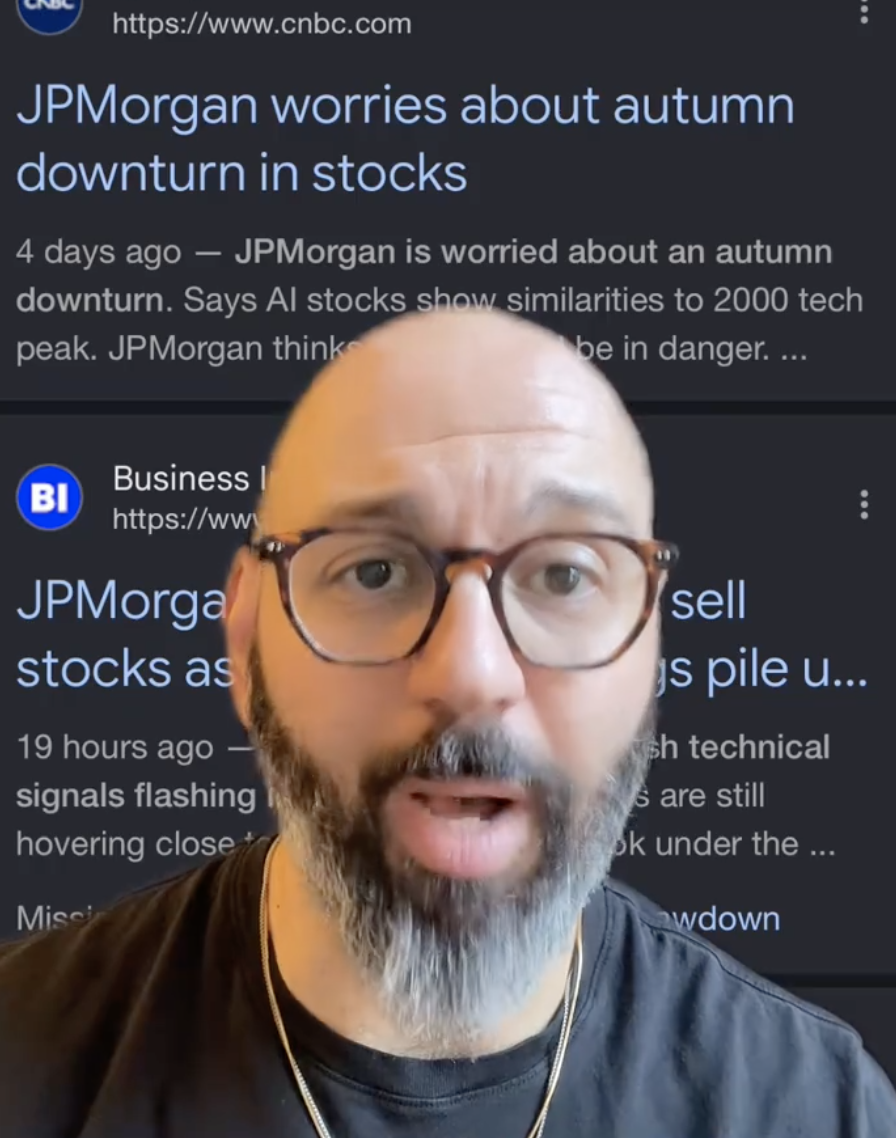
On August 25th, I posted a video sharing an article that stated JPMorgan was warning of a potential autumn downturn in AI stocks.
Afterward, I got out a pen and paper and started writing down the stocks in my portfolio that I wanted to buy more of, along with some stocks I didn't yet own but might be interested in buying if their prices got low enough.
Get my Fundamental Analysis template as a part of my massive Research Vault here.
In August, I didn't know what would cause the market to sell off in October, but I knew it was possible. I also knew it might not happen, because nobody knows with 100% certainty how markets will react to good news or bad.
I don't like the strategy of waiting.
I'll just wait for the markets to drop, and then I'll buy!
Yeah, and what if markets don't drop? What if they just keep rallying? Then what? You've potentially missed out on additional growth.
I don't want to wait. I want to continue averaging in, but I'm also well aware that things are frothy, markets are overvalued, and there are some cracks beginning to form. I started to strategize.
Let's say my plan is to buy 10 shares every month of a stock I like. But cracks are forming, and I'm starting to see the writing on the wall. Again, I could be wrong. I still want some skin in the game in case I am. So I cut back on what I'm buying. Instead of 10 shares, I buy 5 shares per month. The leftover cash sits in my account.
I also cut back in other areas of my personal life. I tell myself that I think a storm is coming, and it could present a rare, extremely good buying opportunity. Maybe we dine out a little less. Maybe we stock up when there are sales at the grocery store.
We never stop living our lives based on a maybe, but we can cut back a little and save a little more.
As markets begin to ramp up for earnings season, I've assembled my list. I'm sitting on more cash than usual, and I'm ready, just in case.
I usually don't invest before earnings (unless I am particularly bullish - but right now? I’m not bullish, I’m cautious!). Remember, I already have decent positions. My goal is to take advantage of deals and panic selling, not gamble on earnings announcements.
When bad news brings the markets down, I deploy a little cash. I buy a few shares here and there.
Some people call this catching a falling knife. I think that's bullshit.
Remember, I'm buying very high quality companies that I plan on holding for a decade or longer. If I buy at $180 per share and it drops to $160, I don't really care. And I might buy more!
Why? Because I remain bullish over the long term. Whether I buy at $180 or $160, it's largely irrelevant because I believe that, down the road, that stock could be worth $500 per share.
When it reaches $500, I'm not going to sit there and say, Oh man! I bought it at $180! If I'd waited a few days, I could've bought it at $160 instead!
I'll just be glad I was in it.
And if the stock never recovers? Guess what? That's okay too, because I'm DIVERSIFIED.
Smart investors know that NOT EVERY SINGLE STOCK in their portfolio will be a winner. The goal isn't to bat 100. The goal is to diversify into high quality stocks. And if you're investing in speculative companies, exercise RISK MANAGEMENT so that your biggest bet doesn't also become the biggest position in your portfolio.
As earnings season unfolds, I pay attention. I read the reports. I look at the good news and the bad news from each company and make a decision.
Is this something to be concerned about? If it is, maybe I don't buy more shares just yet. If it isn't, or I believe it's a temporary issue, then I start adding to my positions.
I don't buy everything all at once, though. I know more earnings announcements are on the horizon, and if those companies report disappointing results, it could drag the overall market lower, potentially creating another buying opportunity in the stocks I'm watching.
And that's how I approach earnings season when everything is dropping.
Let's use NVIDIA (NVDA) as an example.
I think we can all agree that NVIDIA is an extremely high quality company. High quality companies don't always drop as much as higher-risk or speculative companies. Knowing this, I set a mental buying target: if NVDA drops 10%, I'll consider adding more shares.
Well, over the last month, NVDA stock has dropped more than 11%. So, according to my plan, it's time to add a little.
If I ultimately want 10 shares, am I going to buy all 10 the day it finally drops more than 10% over the previous month? Maybe, maybe not. That's a decision I make in real time.
The point isn't to predict the bottom. It's to have a plan, keep some cash available, and be prepared to act when opportunities present themselves.