
WHAT DOES IT MEAN TO BE A LONG TERM INVESTOR?
After the mid-terms earlier this week, we saw a huge relief rally in the markets. Stocks surged as election fears were behind us. Some people will say it was a relief rally: A blue wave means the adults are in the room. We can rest easy! Others will say it was because Trump declared he will accept the results. Others will say it was just relief that the mid-term uncertainty is over and that markets would have rallied either way.
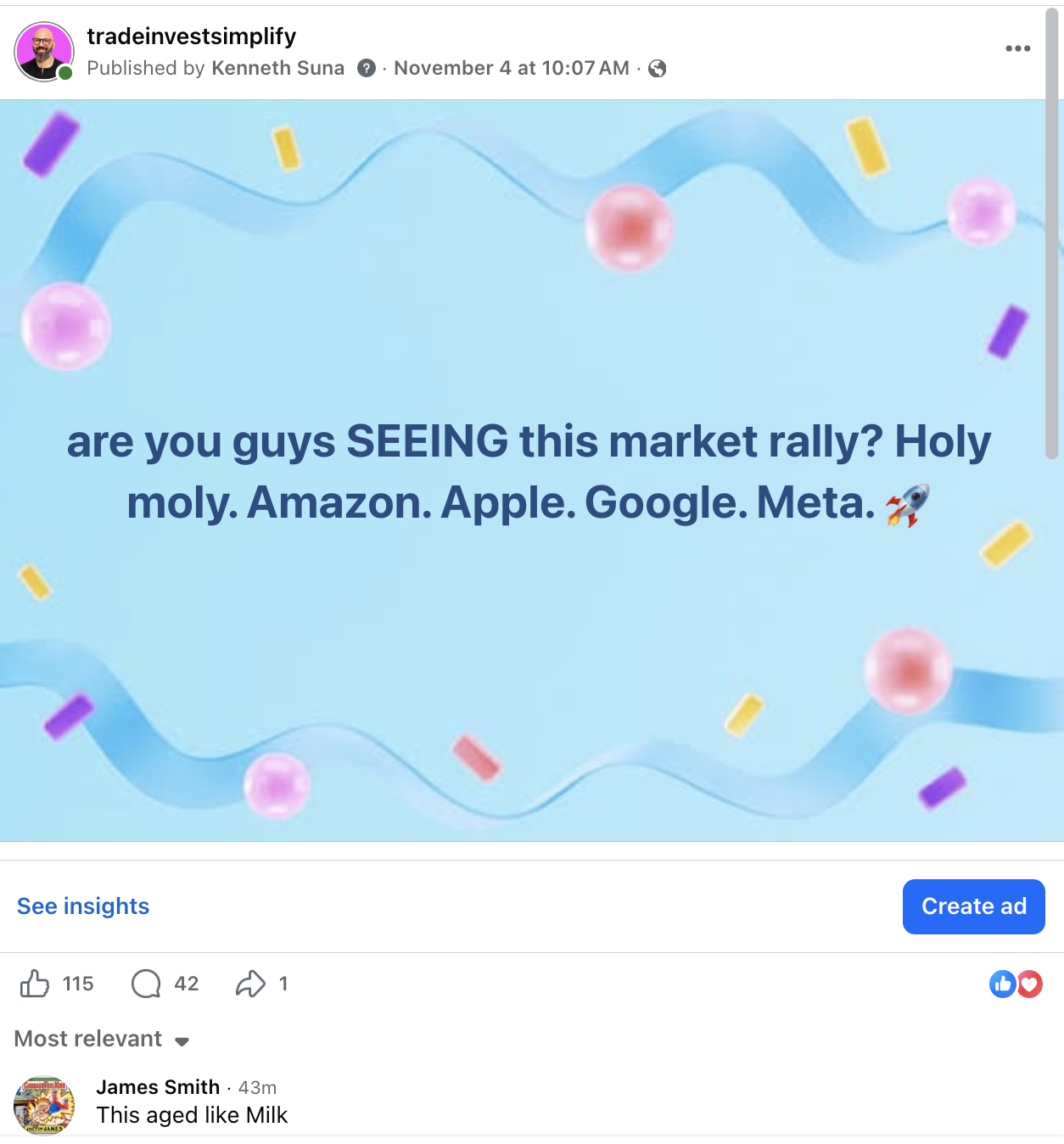
The day after the election, I made a post asking if anyone was watching the stock market surge.
The very next day, we saw one of the biggest down days in recent stock market history with the Nasdaq dropping 5%. Portfolios of NEW investors got WIPED out. I got hundreds of comments and DMs from people asking if they should sell. Some people went all in on ultra high risk stocks, took financial advice from Donald Trump and went all in on his meme coin or Intel stock, and watched their investment plummet.
And the comments on my post about the previous day’s rally? They were popping off. A lot of people came back to point out that this post hadn’t aged well.
It was almost as if some people were learning about daily market fluctuations in real time. Please read this in the most condescending voice you can imagine: Yes, that is correct! Markets can be up one day and down the next. Look everyone, James is learning!
All jokes aside, some investors have ZERO concept of what long term investing actually means. They celebrate when the markets go up, freak out when markets go down, and judge other people's investments based on 24 hour increments.
I bought META at $716 in October and everyone laughed.
I bought MORE META at $611 in November and everyone was divided between thinking I’m a genius for getting in at the perceived bottom, or an idiot, because it will drop even lower! This is EMOTIONAL INVESTING. And it’s one reason why people FAIL to build long term wealth.
Unlike them, I don’t care about today, tomorrow, next month, or even next year. I’m here for decades, not days.
Someone said they bought NVDA at $185 and hoped it would work out. I left a comment saying it doesn’t matter if it’s $175 next week or $205. One day, years from now, she just might brag about buying at $185.
You don’t invest in a company because of the stock price today. You invest because you think long term, it’ll go up. You must remove emotion from the equation and have conviction and a deep understanding of what you bought and why you bought it.
If you’re in these stocks for 10, 20, or even 30 years, you can’t let a bad Thursday impact you.
Either you have a strong belief in the business, growth prospects, and years of potential growth ahead, or you don’t. But one bad day shouldn’t make you question anything or change your mind.
What type of investor are you? Long term and focused or short term and worried? If you’re here for the next 20 years, why does a big scary down day mean anything (other than potentially a buying opportunity to add more?)
And by the way, same thing goes for market rallies. If your stock pops 3% on one day, you shouldn’t be jumping up and down proclaiming that you’re the new Warren Buffet.
Here’s the thing: short term volatility is part of the game. It’ll drive you nuts if you spend your days trying to assign reason to every up or down day. Markets are up because Democrats won! No, wait! Markets are down because Democrats won! No! Wait!
One thing I’ve learned after 27 years of investing is the markets don’t move in a straight line, even though James just learned that today.
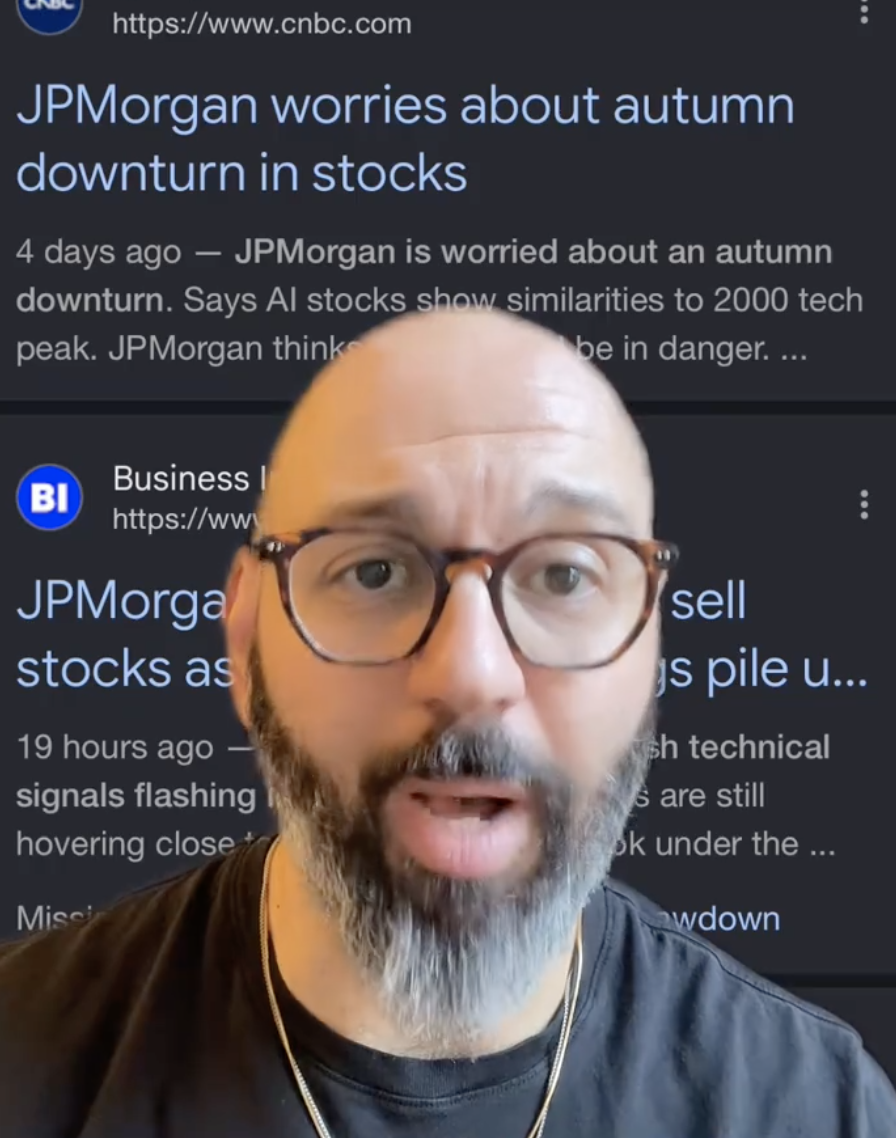
There will be corrections, recessions, wars, political uncertainty, inflation, housing crises, and all sorts of scary headlines. And every single time, someone will leave a comment saying, “this is the end.”
Sometimes markets recover quickly. Other times, it can take years. Some individual companies will never recover.
That’s why you need to be diversified and know what you’re investing in and why.
If someone leaves a comment saying, “oh well” in response to a huge market sell off, I know they’re a confident, diversified investor with a plan. That’s all I need to see. Two words. Oh well.
If you’re investing for the long term, think long term. If you expect markets to go up every single day, or a stock to only go up because you own it, take a step back and calm down.
You don't need the market to go up every day. You don't need every investment to be profitable every month. And you don't need to be right about every market prediction.
You need a plan. You need patience. You need to be able to tell a complete stranger why you invest in the stocks you own. And most importantly, you need to turn emotions off and stick to the plan when markets get scary.
And next time someone tells you that your bullish post didn't age well because the market dropped the following day, just remember: The market has been around a lot longer than the comments section.