

VXUS vs EEM: Which International ETF Is Actually Better?
If you’ve been looking outside the U.S. lately, you’ve probably come across two popular ETFs: VXUS and EEM.
On the surface, they both give you international exposure.
But under the hood? They’re completely different.
If you use my ETF Comparison Template, you can analyze the data in just a few seconds. And that data WILL make you a more informed investor.
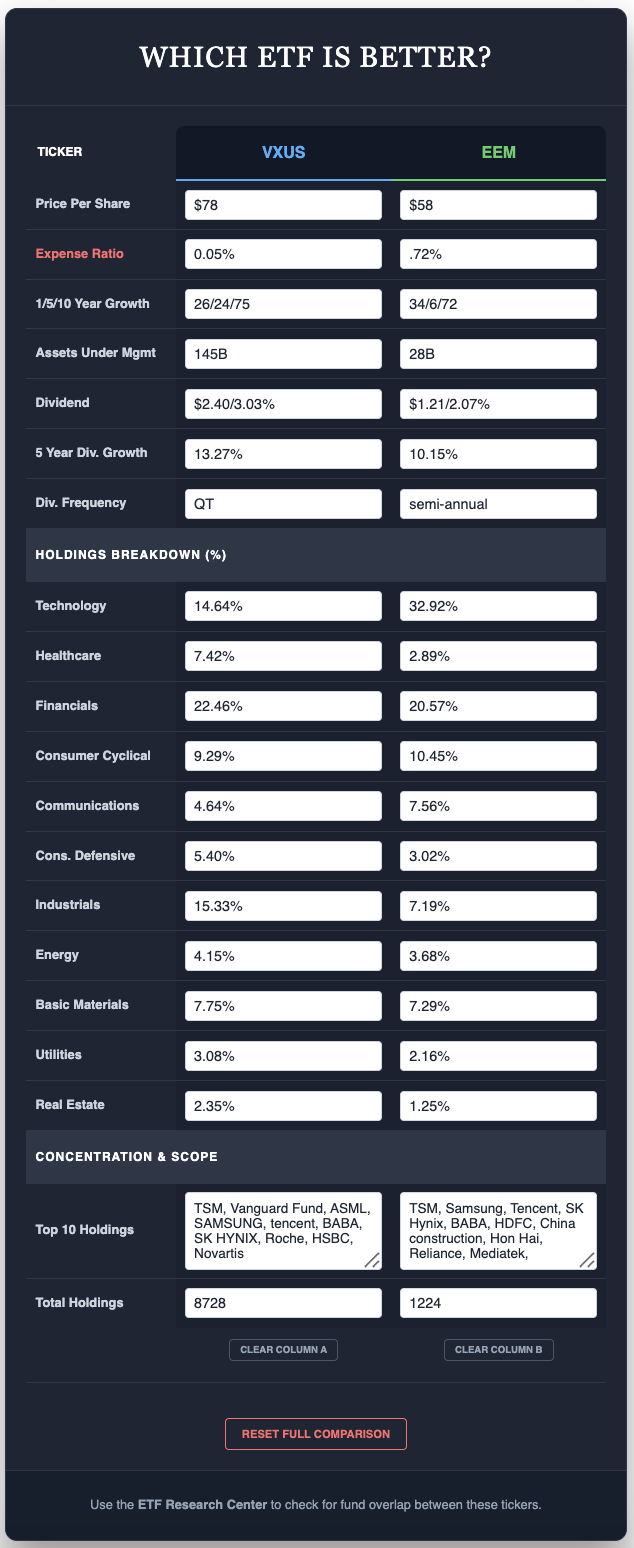
The Big Difference (Most People Miss This)
VXUS = Everything outside the U.S. (developed + emerging markets)
EEM = Only emerging markets (India, Brazil, etc.)
So right away:
👉 VXUS is broad and diversified
👉 EEM is narrow and aggressive
Expense Ratio
Fees
VXUS: 0.05% expense ratio
EEM: 0.72% expense ratio
This isn’t even close. EEM might be more affordable PER SHARE, but investors don’t only focus on the price. They focus on the FEES.
Diversification
VXUS: 8,700+ holdings
EEM: ~1,200 holdings
👉 VXUS spreads your risk across the world
👉 EEM is way more concentrated (and volatile)
Dividends
VXUS: ~3.0% yield
EEM: ~2.0% yield
👉 VXUS pays you more while you wait
Sector Exposure
VXUS is more balanced across industries
EEM leans heavily into tech and emerging market growth
👉 What Does That Mean: EEM will swing harder in both directions
Performance (This Is Where It Gets Interesting)
Our research data shows:
VXUS: steady, consistent growth
EEM: more volatile, with bursts of outperformance
This is exactly what you’d expect:
VXUS = slow and steady
EEM = boom/bust cycles
The Macro Angle Nobody Talks About
Here’s where things get a little more real.
A lot of the recent interest in international ETFs isn’t random.
It’s tied to:
Concerns about the U.S. economy
Political uncertainty
Trade policies (especially tariffs)
During periods like this, money often flows out of the U.S. and into international markets, which can make funds like EEM and VXUS look more attractive.
But here’s the risk:
👉 That trend might not last!
If trade tensions ease in the future and global capital flows shift back into U.S. markets, international ETFs could go right back to doing what they’ve historically done…
Underperform.
The Risk Most Investors Don’t Think About
This is the part that matters if you’re buying today:
Investors who bought international funds a few years ago may look like geniuses right now
But investors buying after the run-up could be buying near a peak
Which means:
👉 You’re not buying “undervalued international exposure”
👉 You might be buying momentum that’s already played out
And that’s how people quietly become bag holders in “diversified” investments.
So… Which One Is Better?
It depends on what you’re trying to do.
Consider VXUS if:
You want broad global diversification
You care about low fees
You want something more stable
Consider EEM if:
You’re intentionally betting on emerging markets with a tech focus
You can handle volatility
You’re okay paying higher fees for that exposure
My Take
If you don’t fully understand why you’re choosing emerging markets … you probably shouldn’t invest a ton in them.
Most investors think they’re diversifying when they buy something like EEM.
In reality, they’re just making a more concentrated bet than they realize.
Emerging market = volatile.
Tech = volatile.
Emerging market WITH heavy tech? Double volatile.
Want to Analyze ETFs Like This in 30 Seconds?
This exact breakdown came from my personal ETF comparison template.
Instead of guessing or relying on opinions, YOU do YOUR OWN RESEARCH. Once the template is filled out, a quick scan lets you see:
Costs
Growth
Risk
Concentration
Income